The Impossibility of Perpetual Motion Machines
201917mEnglishSee rightsFree to watch
See Matt in NYC at Caveat March 7th at 9pm:
About this film
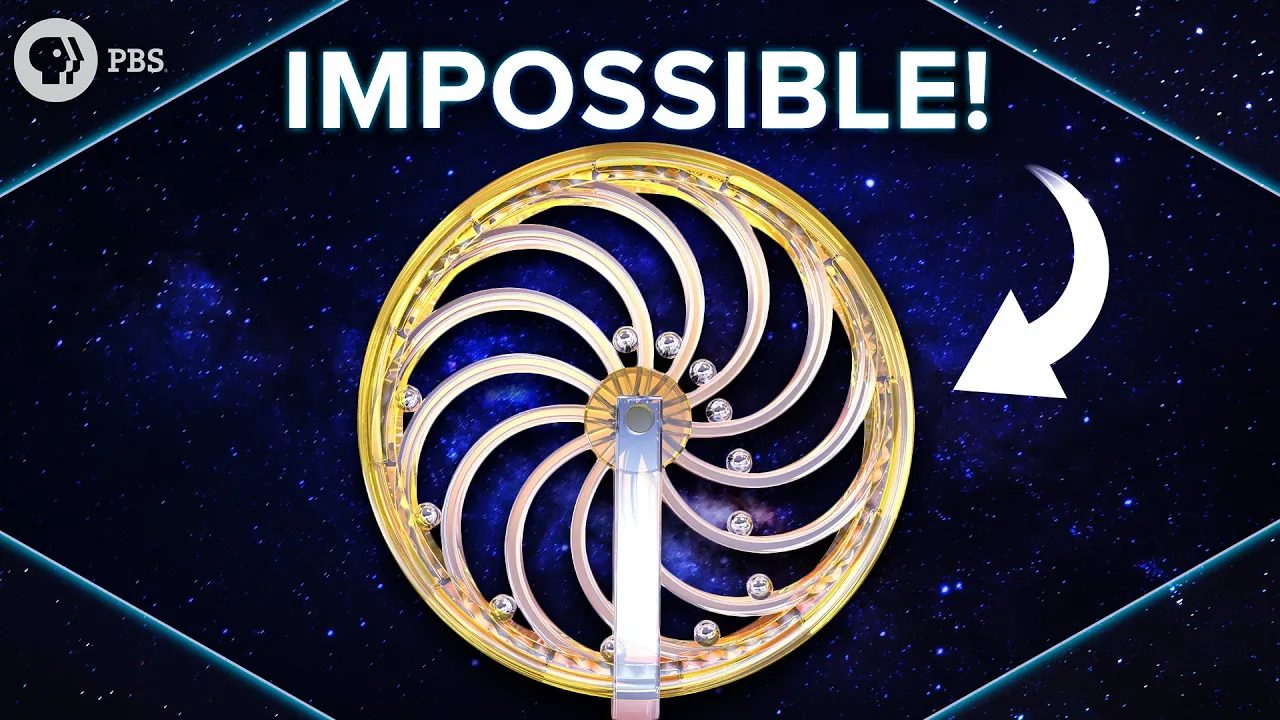
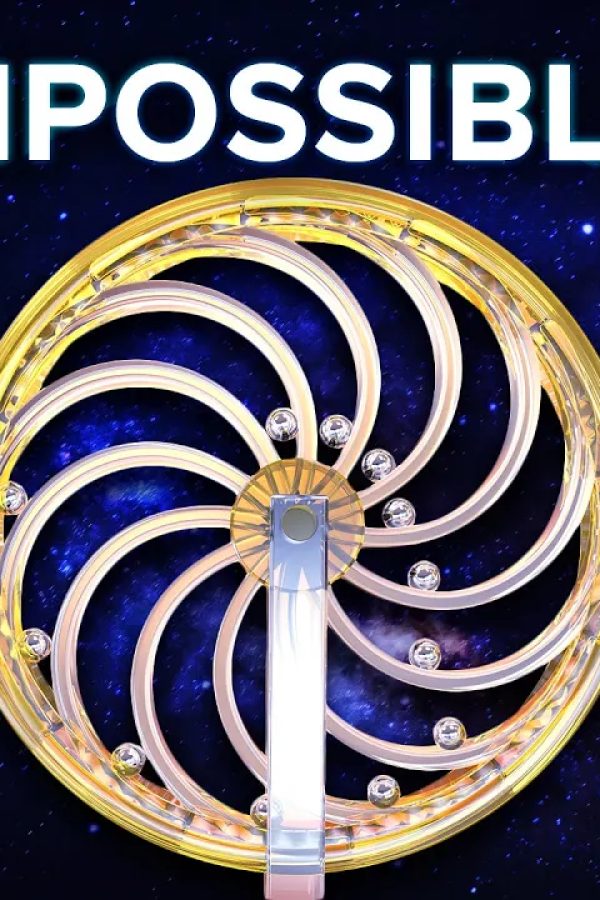
See Matt in NYC at Caveat March 7th at 9pm: Bad ideas come and go in physics. But there’s one bit of nonsense that is perhaps more persistent than all others: the perpetual motion machine. No working perpetual motion machine has ever been experiment verified. All break the laws of thermodynamics. In fact, we classify based on WHICH law of thermodynamics they break. We have perpetual motion machines of the first kind - they violate energy conservation - they pump more energy out than they need to keep running. This includes most of the historical devices. Then there are machines of the second kind - they’re a bit more subtle in their wrongness because break the second law of thermodynamics - extracting energy by reversing entropy. Many modern “free-energy” devices fall into this category. Now the best modern designs are by you - answers to our recent challenge question, which we’ll get to at the end. But first let’s take a look at examples of what other people came up with - this’ll be a fun little journey through some pretty terrible science. Connor Grey Creepy Magician Alex Taylor Adrien Romeo Epsilon Centauri Enoae Andrei Tweet at us! @pbsspacetime Email us! pbsspacetime [at] gmail [dot] com Comment on Reddit: Help translate our videos! Sound Waves from the Beginning of Time Hosted by Matt O'Dowd Written by Matt O'Dowd Graphics by Kurt Ross Directing by Andrew Kornhaber Designing a perpetual motion machine has a very long history and became quite the craze from the middle ages through the renaissance. The first well-documented design for a perpetual motion machine was from the 12th century. Bhāskara's wheel, named after the Indian mathematician, was embedded with tubes of mercury that would flow from back and forth as the wheel turned. Other types of over-balance wheels followed through to the Renaissance and worked on the same principle. There were also designs that employed the magical-seeming lodestones – magnets. For example, this ramp in which a ball is pulled to the top by a magnet before falling through a hole and rolling to the bottom again. Then there are the self-pumping waterwheels or self-blowing windmills. Big Bang: Anton Lifshits coolascats David Nicklas Fabrice Eap Juan Benet Justin Lloyd Tim Davis Quasar: James Flowers Mark Rosenthal Tambe Barsbay Vinnie Falco Hypernova: chuck zegar Danton Spivey Donal Botkin Edmund Fokschaner Jens Theisen John Hofmann Jordan Young Joseph Salomone kkm Mark Heising Matthew O'Connor Alexey Eromenko Antonio Ruiz Bradley Jenkins Brandon Labonte Buruk Aregawi Carlo Mogavero Daniel Lyons David Behtala David Crane David Schmidt Dustan Jones Geoffrey Short Greg Weiss Jack Frosch James Hughes James Quintero Jinal Doshi JJ Bagnell John Webber Jon Folks Jonah Joseph Emison Josh Thomas Kenneth F Leonard Kevin Warne Kyle Hofer Malte Ubl Mark Vasile Nathan Hitchings Nicholas Rose Nick Virtue Ratfeast Richard Broman Scott Gossett Sigurd Ruud Frivik Tim Crookham Tim Stephani Tommy Mogensen سلطان الخليفي
People
Tags
Available quality
- MP4360p640×360 · h26425.4 MB
- MP4480p854×480 · h26430.7 MB
- MP4720p1280×720 · h26444 MB
- MP41080p1920×1080 · h264125.5 MB
Subtitles
Add subtitlesReviews
Sign in — Sign in to leave a review.
No reviews yet. Be the first to say something.
You might also like


2019 · Free

2019 · Free

2019 · Free

2019 · Free

2019 · Free
2019 · Free
2019 · Free
2019 · Free

2019 · Free